Search Results
Search this site
94 results found with an empty search
- Cornwall Film Festival Secures Three-Year Investment to Champion Accessible Cinema Across Cornwall
Mor Media Charity and Cornwall Film Festival have secured a three-year award from Film Hub South West's Film Exhibition Fund to support a major programme aimed at improving access and inclusion across cinema and film events in Cornwall. The award, over three years (2026-2029), will support the delivery of the charity's Screen Access & Inclusion Programme, helping to remove barriers faced by disabled and underserved audiences and ensuring more people can experience film in welcoming and accessible environments. The multi-year investment recognises Cornwall Film Festival's long-term commitment to accessibility, audience development and inclusive practice, and provides a foundation for continued innovation and sector leadership. The funding panel described the proposal as one of the strongest applications received during the round, praising its strategic clarity, deep understanding of audiences and comprehensive approach to accessibility. Assessors highlighted that accessibility had been embedded throughout programme design, audience engagement, delivery and evaluation, rather than being treated as an additional consideration. Louise Fox, Executive Director of Mor Media Charity and Festival Director of Cornwall Film Festival, said: "We are delighted to receive this support from Film Hub South West. Accessibility has always been central to our work and this investment will allow us to build on the progress we have already made. The investment is a huge vote of confidence in our vision, accessibility is not something we add on, it sits at the heart of everything we do. This support will help us strengthen partnerships, develop new approaches and continue creating welcoming cinema experiences for audiences who are too often excluded from cultural provision." The programme builds on several years of audience development work undertaken by Cornwall Film Festival under the umbrella of Mor Media Charity, including autism-friendly screenings, enhanced accessibility provision, community partnerships and targeted work with young people and underrepresented communities across Cornwall. Neil Ramjee, Film Hub South West Community Manage, said: “The assessment panel also recognised the strength of the charity's regional partnerships and the potential for the programme to deliver lasting impact beyond Cornwall, establishing a model of good practice that can inform the wider exhibition sector” The BFI Film Audience Network invests £5.6m of National Lottery funding each year to expand access and encourage greater enjoyment of cinema by connecting audiences with great films - in venues, at events and online. We do this by supporting: leading exhibition organisations, including film festivals, to deliver culturally rich and nationally significant programmes and events on a year round basis projects which help exhibitors and distributors bring the best of UK and international cinema to audiences across the UK through events, distribution releases, multiplatform distribution proposals, touring film programmes and more initiatives that address under-representation and are innovating audience development
- Mor Media Names Clare Tavernor as Creative Lead, Expands Development Slate
UK-based screen charity Mor Media has appointed filmmaker Clare Tavernor as Creative Lead, formalising a long-standing collaboration as the organisation scales its production ambitions. Clare’s background spans documentary filmmaking, including directing and producing flagship BBC arts series such as My Life as a Rolling Stone, as well as ambitious cinema releases including Metallica Saved My Life. Most recently, she co-directed Aldeas – A New Story, an upcoming feature documentary produced by Martin Scorsese. “Aldeas is about creating space for people to tell their own stories through film,” said Clare. “That idea of authorship and collaboration is central to how I approach filmmaking, and it aligns strongly with Mor Media’s ethos.” “Taking on the Creative Lead role feels like a natural evolution of the work we’ve been building together,” she added. “There’s a real opportunity to develop ambitious, distinctive projects from the South West that connect with national and international audiences, without losing their sense of place.” Clare, who has been working across a number of Mor Media’s recent projects, will now oversee creative development across a growing slate spanning film, audio and immersive storytelling. The appointment marks a strategic shift for the Cornwall-based organisation as it evolves from a festival-led model into a year-round production and talent development hub. “Clare has already been instrumental in shaping the creative direction of our work,” said Louise Fox, Executive Director of Mor Media. “This appointment reflects both the depth of that collaboration and our ambition to build a distinctive, regionally rooted but nationally relevant production pipeline. Clare is part of a growing cohort of senior industry professionals choosing to work with us as we expand our production slate and creative vision, alongside a growing network of industry advisors.” Clare is currently leading on Black Tide, Mor Media’s flagship heritage and environmental storytelling project exploring the legacy of the SS Torrey Canyon disaster. The multi-platform project combines documentary, oral history and audio storytelling, and has already attracted industry attention, including a recent shortlist at Sheffield DocFest’s Podcast Pitch. As Creative Lead, Clare will guide projects from early development through to production, working closely with writers, directors and emerging creatives supported through Mor Media’s training programmes. Mor Media is developing a joined-up model that connects exhibition, distribution, talent development and production. Through events such as the Cornwall Film Festival, the organisation identifies emerging talent and supports progression through mentoring, development and industry-facing opportunities. This approach is already delivering results, with talent pipeline participants including Soup Audio Visual achieving national recognition, including success at the Wildscreen Panda Awards, with more project in the pipeline. Clare will play a key part in connecting these strands, ensuring that creative development is embedded within live projects and that emerging filmmakers are supported through to production. The move signals a broader trend among UK regional organisations building in-house creative capacity to retain talent and develop original IP outside London-centric structures. With funding applications in progress and new partnerships forming across the South West and beyond, Mor Media’s expanded creative leadership points to a more ambitious phase, one that bridges community storytelling with professional production at scale.
- Building Momentum: Mor Media’s Start to 2026
By Director Louise Fox January – March 2026: A Strong Start to the Year The first three months of 2026 have been an incredibly productive and forward-looking period for Mor Media Charity, as we continue to expand our work across film, heritage, education and talent development in Cornwall and beyond. 🎬 Film Exhibition & Touring We have been progressing plans for the Edge of Summer regional tour, with screenings and director Q&As now being scheduled across the South West. Following a complex journey to bring the film to audiences, this marks a significant milestone in connecting a locally rooted Cornish story with wider audiences. We are also laying the groundwork for a potential independent distribution strand , using this tour as a pilot model, with projected reach across screenings expected to exceed 350+ attendees Alongside this, we have been developing a new Cornwall Film Festival website , making it easier for audiences, filmmakers and partners to access and engage with our year-round activity. Supported 3 film tours with Q&As and marketing support, strengthening regional exhibition. 🏛️ Heritage & Community Projects Our Black Tide: The Torrey Canyon Project continues to gather momentum as we mark the 60th anniversary of the 1967 oil spill. 25 oral histories recorded to date Recent engagement activity delivered across West Penwith , including work with U3A groups, libraries and the local lifeboat stations Ongoing partnerships with community organisations and heritage networks across Cornwall Development of a new project website , designed to communicate and share the archive more widely This work is building a vital, community-led archive that centres lived experience and ensures Cornish voices are at the heart of this nationally significant story. 🎓 Talent Development & Industry Programmes We have been advancing our Creative Challenge Fund programme, alongside wider talent development activity. Programme design completed with a target cohort of 14 participants across Cornwall, Devon and the wider UK 25 participants engaged through Story Labs exploring writing and visual storytelling 329 submissions received to date, with 95 pre-selector applications supporting our programming pipeline Launch of Quick Cut: The 90-Second Film Challenge , creating new entry points for emerging filmmakers Our activity engaged 6 freelancers, strengthening regional employment and the creative economy. Together, these strands are strengthening pathways for creatives at all stages of their careers and supporting a more diverse and connected screen ecology. 🎓 Education & Audience Development We have continued to deliver education and audience engagement activity across the region: Delivered the Into Film Spring Festival across 3 venues in Cornwall 2 animation workshops delivered for Animate Helston 5 screenings hosted, supporting access to independent film and shared viewing experiences Our team's attendance at the Berlin Film Festival , building industry connections and insight This work supports the development of creative skills while building future audiences for independent cinema. 🏛️ Advocacy & Sector Leadership We have been actively advocating for the independent cinema sector in response to the Government’s £1.5 billion investment in culture. Direct engagement with MP-level stakeholders Coordinating input from independent cinemas across Cornwall Active participation in the British Arts Festival Association , including conferences and sector meetings Contributing to national conversations on cultural infrastructure, access and regional equity This work positions Mor Media as a strong regional voice within national policy discussions. 🤝 Partnerships, Funding & Growth This quarter has also been a period of significant organisational growth and consolidation. Successful funding applications secured , supporting future programme delivery and sustainability Partnerships strengthened across 10+ organisations spanning exhibition, heritage, education and industry Continued expansion of our networks locally and nationally Strengthening Impact and Reach These developments are helping to secure Mor Media’s long-term growth and impact. Looking Ahead As we move into spring, we are excited to bring these strands together through live events, screenings and new programme launches. With strong foundations in place, 2026 is shaping up to be a year of growth, connection and impact. We are grateful to our partners, collaborators, team, audiences, Trustees and advisors, whose support makes this work possible, and we look forward to a well-earned pause before the next phase.
- BAFTA Judge Resigns Following “utterly unforgivable” Broadcast Controversy
Why the BBC’s failure to edit the BAFTA slur highlights a need for better education and production protocols. BAFTA judge Jonte Richardson has announced his resignation following Sunday evening's controversial events during the awards ceremony. In a sharp critique of the incident, Richardson described the events during Sunday night’s awards ceremony as "utterly unforgivable." Michael B Jordan & Delroy Lindo at the BAFTAs 2026 The Incident The controversy arose during the presentation of an award by actors Michael B. Jordan and Delroy Lindo. During their time on stage, Tourette's syndrome campaigner John Davidson vocalised a racist slur. While both actors appeared visibly shaken by the outburst, they remained professional and continued with the presentation. John Davidson is a prominent Tourette syndrome activist whose life story was adapted into an inspirational film, I SWEAR, highlighting the hardships associated with the condition. Following the ceremony, Davidson expressed his distress over the event: “I am deeply mortified if anyone considers my involuntary tics to be intentional or to carry any meaning. I have spent my life trying to support and empower the Tourette's community and to teach empathy, kindness and understanding from others and I will continue to do so.” Questions of Editorial Oversight John Davidson at the BAFTAS 2026 Davidson has worked alongside the BBC on multiple occasions. He suggested that the broadcaster should have been better prepared for the nature of his condition to prevent such tics from being broadcast. Davidson remembered “there was a microphone just in front of me, and with hindsight I have to question whether this was wise, so close to where I was seated.” Davidson continued, “ I want people to know and understand that my tics have absolutely nothing to do with what I think, feel or believe. It's an involuntary neurological misfire. My tics are not an intention, not a choice and not a reflection of my values.” A Pattern of Scrutiny This follows previous criticism of the BBC’s management, when the broadcaster faced backlash over the performance by rapper Bob Vylan at Glastonbury, which contained controversial language, and remained on iPlayer for several hours after the live set. The BAFTA incident has placed the BBC under renewed scrutiny. Despite assurances that the ceremony would be edited to remove profanity before airing, the inclusion of the slur has sparked a heated debate regarding broadcaster accountability and the sensitivity required when filming individuals with involuntary conditions. Key Takeaways Ultimately, accountability for this oversight lies with the BBC. While the broadcaster works diligently to champion diverse and inclusive spaces, more robust measures should have been implemented, not only to prevent the slur from reaching the airwaves but to ensure that both the audience and the presenters were adequately briefed beforehand. For many, encountering the complexities of Tourette syndrome can be a profound shock, particularly when tics involve involuntary vulgar language. While this production failure shouldn't discredit the BBC’s broader commitment to representation, it highlights a clear need for improved protocols. The delay in rectifying the digital broadcast remains a significant concern, yet it also presents a vital opportunity for us all to better educate ourselves on the realities of Tourette syndrome and foster a deeper understanding of the disability. Written by Angelique Cloete
- Why the UK’s Independent Cinemas Matter and Why Their Exclusion from Cultural Funding Should Concern Us All
As Director of Cornwall Film Festival, delivered by Mor Media Charity, I’m writing this to raise awareness of a quiet but serious issue facing the UK’s cultural landscape: independent cinemas have been excluded from the Government’s recent £1.5 billion investment in culture . Like many in the sector, we welcome this significant investment and recognise its potential to support sustainable cultural organisations that contribute to economic growth, wellbeing and social cohesion. But the absence of cinemas, particularly independent and community-facing cinema, is deeply worrying. Top left: Merlin Flora Cinema, Helston, The Poly Falmouth, WTW Lighthouse cinema, Newquay. Middle row, Mike Leigh & Mark Kermode at Cornwall Film Festival, the Merlin Savoy cinema, Penzance. Bottom left Merlin Regal Redruth, WTW The Regal Wadgebridge, Newlyn Filmhouse Cinemas are a vital part of the cultural infrastructure Cornwall Film Festival works year-round with independent cinemas and community screening venues across Cornwall, where cinema is often the most accessible cultural experience available locally. In a geographically dispersed county, these spaces are not a luxury; they are essential. Through our partnerships, we: bring UK and international film & filmmakers to Cornwall support early-career filmmakers deliver education and outreach programmes for young people create shared cultural experiences that strengthen community connection Independent cinemas sit at the heart of this ecosystem. They act as cultural anchors, support local economies, nurture creative talent and provide inclusive, affordable access to culture. A sector at risk We welcome the investment but urge the Government to reconsider the exclusion of cinemas from capital funding. Our national partners at the Independent Cinema Office provide this stark evidence: 31% of independent cinemas do not believe they can remain operational without access to capital funding within the next 3–5 years A further 28% are unsure For many, there is currently no viable route to National Lottery or public capital investment This is not a marginal issue; it’s an existential one. Why this matters in places like Cornwall In regions such as Cornwall, cinemas play a disproportionate role in sustaining cultural life, supporting local creative industries and tackling rural isolation. Treating cinemas differently from museums, libraries, arts venues and heritage buildings risks undermining the long-term resilience of our cultural infrastructure. If we believe culture should be accessible to everyone, not just those in major cities, and cinemas must be recognised as part of that essential fabric. A call for change Today, I have written to Jayne Kirkham , MP for Penryn & Falmouth, asking her to raise this issue with the Department for Culture, Media and Sport . I have also written to Lisa Nandy , Secretary of State for Culture, Media and Sport, urging her to support the inclusion of independent cinemas within future cultural capital funding programmes. Independent cinemas deserve to be supported on an equal footing with other cultural institutions, not as an afterthought, but as a cornerstone of cultural life. If we allow these spaces to disappear, we don’t just lose screens. We lose places of gathering, discovery, learning and shared experience. And once they’re gone, rebuilding them will be far harder and far more costly than supporting them now. Louise Fox Director, Cornwall Film Festival Mor Media Charity
- Brief Encounter: Aristotle, faerie sight and grit in your eye…
Brief Encounter (1945), 1946 UK release, directed by David Lean, screenplay Noel Coward, starring Celia Johnson and Trevor Howard Written by ©Judith Noble, November 2025. Professor Emerita (Film and the Occult) Brief Encounter has classic status; one of the most beloved of British films; the ultimate weepie, British audiences cited it as the film most likely to make them cry. Its reputation has grown in the last forty years; time has changed our appreciation of it. It was moderately successful on release, but out-performed at the box office by The Wicked Lady. It was characterised on its release as a quality film that would attract middle-class audiences. Now here it is in a season of melodramas. Let’s look a little closer at the film’s appeal: why does a black and white 1940s movie that revolves around just two very middle-class characters (with the kind of accents that are only heard in comedies these days) living out gender stereotypical roles that barely exist anymore, and who, by modern standards, do not really get up to very much, still attract audiences eighty years after it was made? The film retains a tremendous emotional power. Some years ago, I had the salutary experience of teaching film narrative to animation students at an arts university by screening examples of classic films. Part of the post cinema generation, these students had never seen any classic films before. My practice was to screen the first half hour of the film (due to time constraints) then discuss what was going on, and leave the students to watch the rest in their own time. When it came to Brief Encounter, the outcome was startling. At the end of half an hour, the students begged me not to stop the screening, so we watched the whole thing. By the end, all the students were weeping. Many of them were very shocked that the film had elicited this response, although I had forewarned them about its power. I spent the lunch hour comforting distraught animators. Brief Encounter is being shown today in the context of a season of melodramas, often a very undervalued genre. A melodrama can be defined as a film where music is a fundamental element of the narrative. It is also usually a film made for female audiences, with a story told from a woman’s point of view, and full of emotional highs and lows. Brief Encounter is certainly all of those things. The music especially is a key: Rachmaninov’s dramatic, romantic Second Piano Concerto played here by Eileen Joyce (a very popular female performer when the film was made). I think the film is also rather more than a melodrama. It may surprise people to learn that in the 1920s and 30s the key textbook for Hollywood screenwriters was Aristotle’s Poetics. How many of them used it to good effect is open to debate, but Brief Encounter fits Aristotle’s definition of tragedy perfectly: the characters try to escape their pre-ordained fates; the audience empathises with them in this; the drama evokes feelings of pity for them, and at the end the audience experiences an emotional cleansing or catharsis. This is a film about two, small ordinary lives, but it is no less tragic for that; the characters cannot escape their fates and we weep for them. It is, of course, perfectly okay to weep when watching Brief Encounter and indulge in catharsis as approved of by Aristotle. There is so much we could say about this film. To some it may seem dated and class ridden, and some of the humour has to be explained to younger audiences. The phrase, “getting a girl into trouble”, for example, has lost its risqué meaning. Eighty years after its making, surely there are no middle- class nuclear families with cut glass English accents, two perfect children and a servant to make dinner anymore? But… surely anyone who has loved “the wrong person” will see something of themselves in this film, and recognise the power and danger in desire that can tear lives and families apart. Perhaps too, the film will appeal most to those who have shared the experience of its main characters: an older audience with more life experience; to those who “do the right thing” and who do not allow illicit desire to disrupt family and relationships, but who will still be changed by it forever. Part of the film’s success lies in the fact that it is incredibly well-crafted and precisely made in a particularly British, tweed jacket kind of a way. Acting, mise-en-scene, camerawork, are all more or less perfect. It has strong links to the theatrical tradition: The confined interiors, the close focus on the two main characters, and the comic working class characters used as foils for the protagonists which date back as far as Shakespeare (think of the ‘rude mechanicals’ in A Midsummer Night’s Dream) but is completely cinematic, for example the close up of Dolly’s mouth as she talks relentlessly, and the tracking shot that opens the first refreshment room sequence and establishes the characters. The spare, matter of fact acting and camerawork and the pace of the film, hurried along by the plot device of the railway timetable, mean it never descends into sentimentality. It has wry moments of comedy, mostly at the expense of the popular culture of its time. Please do look out for the wonderful comic cameo by the ineffable Irene Handl. It is a “woman’s story” and told throughout from Laura’s point of view; she narrates it. But look, she is not just telling us her story; she is telling it in her mind to her husband, Fred, the one person to whom, as she says, she will never really be able to tell this story. It is important to note, though, that there are no women behind the camera here; we have Lean and Coward telling a woman’s story. The role of Celia Johnson is absolutely pivotal, and her performance is extraordinary. She is on screen for almost all of the film. Notice how she has to act silently in several sequences, conveying extreme emotion without speaking on camera, while telling her own story in voice over. She comes across as a much stronger character than Trevor Howard. I find his actions have a difficult coercive undertone; he continually forces Laura to admit more, do more, overcome her scruples, and this makes her moral dilemma all the more frightening and compelling. Just as the protagonists are dominated by their societal roles and rigid convention, so the plot is dominated by time. It is structured through the railway timetable which allows the lovers only brief bites of time together before they must catch their trains home to their families. As well as the narrative, the music, the Rachmaninov concerto, belongs to Laura: we only hear it through her (it stops when the camera focuses on other characters) and it signifies her desire for Alec, so the symbolism of Fred asking her to turn the music down as she sits overwhelmed by emotion, is almost unbearable. The film is often described as “realist”: Its rundown realistic locations and sets are a million miles from Hollywood scenarios, or from other lavish British films of the period (The Wicked Lady, for example), and the characters wear understated everyday clothes; it is trying to look just like the lives of its intended audiences. It has always been recognised that Brief Encounter, written by one of the most well-known gay men of his generation, has a gay subtext, and it remains a favourite with queer audiences. The film is based on Coward’s play, Still Life , and we should note here Kneehigh Theatre’s wonderful live theatre production of Brief Encounter, first performed in 2007 and directed by Emma Rice, that draws heavily on Coward’s original theatre piece. We can read the love affair in Brief Encounter as emblematic of the fleeting unfulfilled desire that was the experience of gay men at a time when homosexuality was a criminal offence. Richard Dyer’s book on the film for the BFI Classic Films series explores in detail the many pleasures of Brief Encounter for queer audiences. In 1990 Richard Kwietniowski (who subsequently directed the feature film Love and Death in Long Island) directed a witty, elegant short film, Flames of Passion; a gay re-imagining of Brief Encounter. Brief Encounter has for me a strong link to the world of fairy tales and archetypal storytelling. In the inciting incident. Laura gets a piece of grit in her eye, and Alec removes it. This is what everyone remembers about the film and it has been used in comic sketches and advertising down the years. This metaphor of “something in the eye”, of fear of blindness, which is specifically referred to here, and of another kind of sight is common in folk tales; think of the splinter of ice in little Kay’s eye in The Snow Queen. Faery ointment confers the ability to see into Faerie and bestows inner vision on mortals and may be dispensed by faeries or by mortals working for the faeries. But this second sight, this inner vision is a precious and secret thing; only meant for mortals if gifted to them by the faeries, and not to be stolen or taken by accident. If you admit to having it without permission, disaster will ensue. In one folk tale which has variants across Wales, Cornwall and other parts of Britain, a mortal nurse hired to look after faerie children accidentally gains the sight through misuse of faerie ointment. She admits to her faerie master that she can see him; he asks her which eye can see him, and immediately blinds her in that eye. This kind of magic vision, gained by Laura when the grit gets in her eye, is a very dangerous thing. She did not ask to be given it but it will change her forever. It enables her to “see” Alec in a new and shocking way; to look and to desire; were she to admit to this, she would lose everything. Notice how, when the flashback sequence starts we see Laura sitting on a chair at home with her workbox, seeing herself in her inner, magic vision, looking into the inner world of the film and her last meeting with Alec. In the café, when Alec starts to explain to her about his medical specialism, she says “I see” repeatedly. There are metaphors for vision throughout the film, not least when we watch the lovers in the cinema watching a film. When we see Laura looking through the window of the railway carriage, she is looking intently, but seeing her new inner worlds and the object of her desire rather than her everyday surroundings. Brief Encounter reminds its audience repeatedly of this archetypal storyteller’s trope of the second sight, the faerie vision which is full of pleasure, danger and tragedy in equal measure. Please remember: Its okay to cry . Watch a clip of Flames of Passion; a gay re-imagining of Brief Encounter.
- From the Louvre Haul to The Mastermind
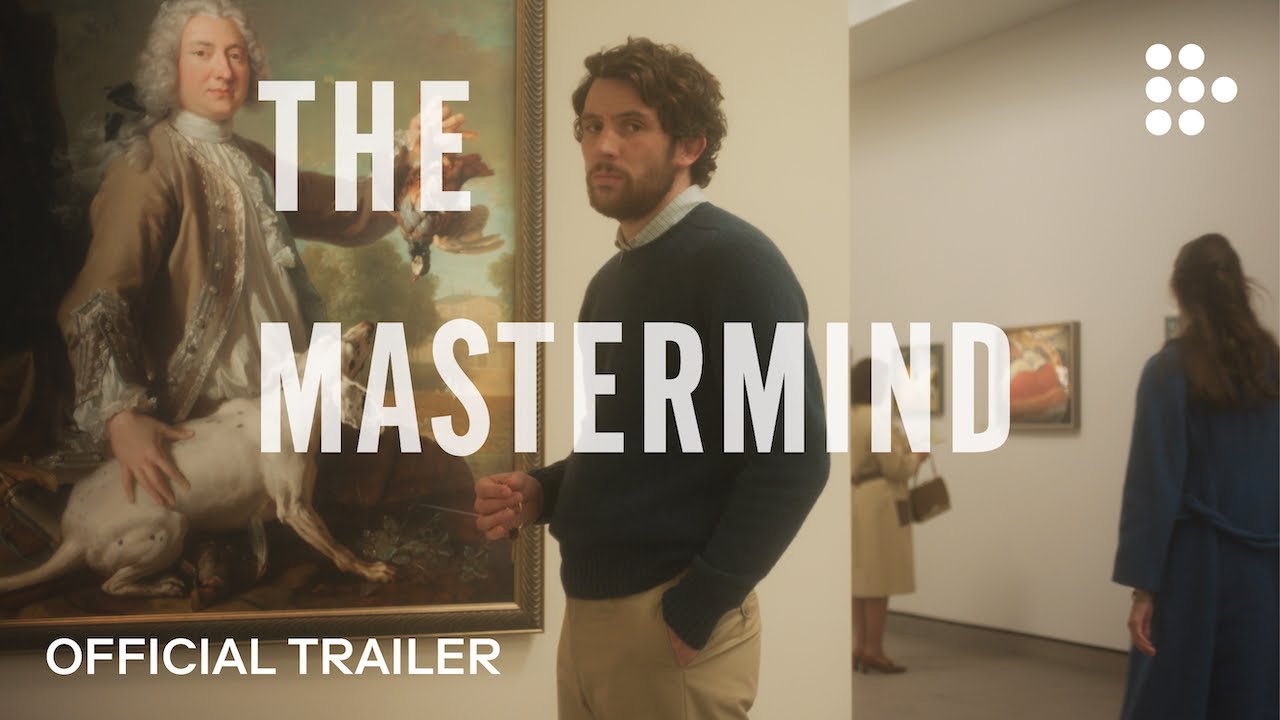
Many people saw it as a bit of fun as we explored a mock haul from the Louvre , inspired by the quirky escapades of a fictional art heist! But while our playful nod to jewel-thieving mischief might have sparked smiles, Kelly Reichardt’s The Mastermind —screening at The Poly, Falmouth on Sunday 23 November, 5.15–7.15pm —offers a far more reflective take on crime, consequence, and chaos. Reichardt, the acclaimed filmmaker behind First Cow and Showing Up , turns the heist genre inside out in this quietly riveting new drama. The Mastermind follows JB Mooney (played by Josh O’Connor ), a down-on-his-luck carpenter and failed art historian who persuades his mates to steal a series of Arthur Dove paintings from their local museum. The plan is doomed from the start—spotted by schoolgirls, bungled in a scuffle, and undone within days—but the director’s lens transforms their failure into something strangely beautiful. Set in 1970s America , at the crossroads between the fading dreams of the 60s and the disillusionment of the new decade, Reichardt’s film pulses with quiet tension and political undercurrent. While Mooney stumbles from one mistake to the next, the background hums with anti-war protests, Nixon broadcasts, and the creeping rise of individualism. It’s a heist film stripped of glamour, where every choice reverberates through the people left behind—most heartbreakingly Mooney’s wife Terry (played by Alana Haim ) and their two young sons. Scored to a restless jazz soundtrack by Rob Mazurek and Chad Taylor , The Mastermind is both melancholy and mischievous, an examination of how one man’s search for freedom ripples across others’ lives. In contrast to the real-life efficiency of those seven-minute Louvre thieves, Reichardt’s misfits remind us that freedom often comes at someone else’s cost—and that, sometimes, the greatest heist is simply getting away with ourselves. 🎟️ Screening Tickets The Mastermind The Mastermind is included in our Pay What You Can initiative 📅 Sunday 23 November, 5.15–7.15 pm 📍 The Poly, Falmouth 🎬 Director: Kelly Reichardt
- Nicole Kidman LOVES Letterboxd! ...Do We?
At the tail end of 2024, online film and pop-culture communities were shaken right to the core by the revelation that pop superstar Charli xcx had a public Letterboxd account, containing a seemingly exhaustive record of every film the Guess hitmaker has watched. As of September 2025, her page boasts an astonishing 1,250 different films viewed, as well as 499 direct diary entries recording the precise date of viewing - plus the occasional one-liner review in her trademark nonchalant snark. (via @itscharlibb ) Some might dismiss the account's contents as an inane collection of parasocial detritus, but fans certainly didn't think so - and neither did cinephiles. In fact, the account was a topic of fascination and even press attention over the the following days, with many taking the eclecticism of her viewing habits as just further credentials for her status as one of today's cutting-edge artists. Among her highest-rated films are beloved dramas ( Phantom Thread ), art-house classics ( Persona ), notorious exploitation films ( Funny Games ) and even the occasional family favourite ( Babe: Pig in the City ) thrown in as, presumably, a much-needed palate cleanser from the previous. The breadth of genres, languages and cultures represented on her page is considerable, and it's highly likely that some of her 284k followers on the platform have discovered entirely new favourite directors and movements simply because she happened to log a certain film on her diary one evening. A tap of a finger on Charli xcx's phone, and the 97-year-old silent classic The Passion of Joan of Arc enjoys yet another wave of cultural relevance. Launched in 2011, Letterboxd's popularity has soared over the past five years - due in no small part to the pandemic and the sudden abundance of idle time in its wake. The website's impressive 17-million-strong userbase includes rising stars Rachel Sennott , Jaeden Martell and Millie Gibson, as well as beloved directors Francis Ford Coppola, Sean Baker and Martin Scorsese. (via @mscorsese ) The brand has also become a much welcomed presence on red carpets, with industry titans chomping at the bit to declare their "Four Favorites". One particularly memorable interaction came early this year courtesy of Nicole Kidman, whose striking endorsement of the brand at Palm Springs International Film Festival cemented its exceptional cultural capital. "Letterboxd?! We LOVE Letterboxd!" - Nicole Kidman at Palm Springs International Film Festival (via @LetterboxdHQ ) A stroke of marketing genius, the Four Favorites gimmick simply asks Letterboxd users (and more recently, interviewees) to select any four films that encapsulate their taste – showcased in a neat little row via their posters. Some choose to exhibit their all-time top four, while others make a point of representing a different genre with each one. Some even select their top four less for the merit of the films themselves, and more for the immediate aesthetic value of their posters. While it may seem reductive to compress complex cinematic experiences into little more than digital trading cards – there's no denying that the Four Favorites is a hugely appealing shorthand for cinephiles to express their identity, especially if they can boast that they've sat through all 7 hours of Sátántangó . Another perk of the format is how easily it translates to short-form video content. Letterboxd's official channels regularly post clips of high-profile actors, directors and other industry professionals unveiling their own top fours – which are often met with fascination (and scrutiny) from cinephiles on social media. An especially intriguing top four came from none other than Murder on the Dancefloor hitmaker Sophie Ellis-Bextor who – in spite of the sunny family-oriented image she usually projects – selected two of the most harrowing parental horrors in existence: Don't Look Now and Rosemary's Baby . It certainly makes for an attention-grabbing and shareable clip – but more than that, it reveals another layer to Ellis-Bextor's star persona and, possibly, a new perspective for fans to interpret her music from. Sophie Ellis-Bextor declares her top four (via @LetterboxdHQ ) The past few years have seen mainstream social media platforms become, bewilderingly, increasingly hostile (and in many cases outright dangerous) to minority groups, and creative voices have seen our platforms shrink at a startling rate. In stark contrast to X (Twitter) and Facebook, Letterboxd still uplifts racial minorities , feminist perspectives and the queer community through its own newsletter - and while the site's userbase is certainly not immune to cyclical squabbles or petty oneupmanship, the likelihood of an individual's Letterboxd review being inundated with calls for their lynching remains, mercifully, low. If cinema is, as legendary film critic Roger Ebert said, " a machine that generates empathy ", the vast majority of the Letterboxd community appear to have picked up the message. In that case, choosing a "top four" becomes not a frivolous self indulgence – but a declaration of identity, values and connection to fellow human beings. It's little wonder that every progressive-leaning celebrity is vying to announce down Letterboxd's tricolour microphone that their Four Favorites happen to include Portrait of a Lady on Fire , Tangerine or Happy Together . As much as Charli xcx's sudden Letterboxd fame appeared to have come as a shock to her, she has since embraced fate and springboarded straight into the role of accidental film critic. On TikTok, she has begun posting roundups and off-the-cuff reviews of the films she has recently logged on her page – many of which are niche auteurist works from a range of time periods and cultural backgrounds. Charli xcx reviews Joachim Trier's upcoming film Sentimental Value (via @charlixcx ) Sure, these films would still exist if Letterboxd did not. However, what Letterboxd provides is a kind of connective tissue between films, creatives and viewers that has never really existed before. What may at first appear to be little more than an aesthetically-pleasing database is in fact a remarkably effective mechanism that encourages cinematic exploration and gives underappreciated films and filmmakers their moment in the sun. Whether the site will remain on the side of artists or veer irrevocably into to capitalistic greed remains to be seen – but for the moment, Letterboxd feels like the jolt of life that the cinematic art form desperately needs. Follow Mor Media on Letterboxd to discover our exclusive film reviews, curated lists, and the latest updates on Cornwall Film Festival 2025. Leon Hill is a BA Film student at Falmouth University and currently interning with Mor Media. You can follow their creative misadventures on Instagram ( @leonbeckerhill ) and read their film reviews on Letterboxd ( inlandecho ). #NicoleKidman #Letterboxd #CharliXCX #PalmSpringsInternationalFilmFestival #PhantomThread #Persona #FunnyGames #BabePigInTheCity #ThePassionOfJoanOfArc #RachelSennott #JaedenMartell #MillieGibson #FrancisFordCoppola #SeanBaker #MartinScorsese #SophieEllisBextor #DontLookNow #RosemarysBaby #PortraitOfALadyOnFire #Tangerine #HappyTogether #JoachimTrier #SentimentalValue #RogerEbert #MorMedia #CornwallFilmFestival #Cinephile #MovieLovers #FilmCommunity #IndieFilm #FilmCriticism #PopCulture #FilmFestival #QueerCinema #FeministFilm #CultCinema #CinemaLovers #FilmReview #TikTokFilm #SocialMediaCulture #FourFavorites #FilmDiary #MovieRecommendations
- ‘An insult to life itself’: Art vs AI
By Lola Milroy-Tompkins Recently online, a clip of Hayao Miyazaki, creator and animator of Studio Ghibli, has gone viral everywhere. In the clip, Miyazaki watches a demonstration of an AI-created figure, potentially used for zombie-like movements in films or videogames, and calls it ‘an insult to life itself’. This quote has become the slogan of a movement against AI’s presence in the arts and film, especially in animation. But what does AI have to do with Miyazaki, why are people so angry, and what could the future of use of AI in the arts look like? AI has only recently become relevant to the conversation around art, and other creative disciplines such as animation, film, and photography. GPT-4o, which is an AI similar to ChatGPT, has been released with the ability to generate original art pieces and animations, or to transform an uploaded photos into an art style. In response, hashtags such as #noai, #supporthumanartists, #standwithanimation have become viral on social media and making major UK newspaper’s headlines. But why are people so enraged? One main line of debate against AI’s presence in the arts is due to the methods used to train AI to output answers. In order to teach an AI how to “draw” or “write” or “compose”, thousands of examples of artwork and writing are scraped from the internet, without the consent of the creator, which infringes copyright. However, there are many holes within this argument. For example, don’t humans also copy other artists’ style in order to learn how to draw? Is art that is publicly available allowed to be used as learning material, and can AI actually learn ? In addition to this, AI can have real, negative implications for artists and producers. Being used to draw animated backgrounds, design characters, create marketing, and more, threatens the livelihoods of creative professionals across industries. At KQED news, it has been reported that arts students have reported being deterred from entering creative professions because of the employment instability that AI has created. Here, a second argument has been gaining traction, one which centres the sanctity of the artist that Hayao Miyazaki represents. Miyazaki’s iconic animation style holds nostalgia for millions of people. His films are famous for utilising hand-drawn animation techniques to create the beautiful and detailed scenes of Studio Ghibli. Howl's Moving Castle (2004), Studio Ghibli This animation style has been adapted by GPT-4o into an AI art filter, allowing users to upload photos and have them transformed into a Ghibli style piece. But when ‘Ghiblified’ images began to spread on social media, Miyazaki’s own words were used to fight back. At the core of Miyazaki's viral quote, ‘an insult to life itself’, is the belief that the core of art is the lives of humans, not the calculations of a machine. Where creators have spent lifetimes perfecting their craft, AI can only replicate its soulless corpse. The goal of the anti-AI movement is to centre the work of the human over their creation, in this case represented by Miyazaki’s commitment to traditional artistry in animation over Studio Ghibli’s superficial aesthetic. In the age where human efforts are quickly being replaced with technology, this calls into question, should the efficiency of a machine be prioritised over a person’s passion? One of the most important discussions of the debate will be where we go from here. If the answer is to stop AI entirely then we’re already too late. In the film industry especially, AI has been utilised by some of the biggest projects to release these past few years. Multiple Marvel films, Deadpool and Wolverine (2024), The Brutalist (2024) are just a few examples of major film successes which have employed AI to create special effects, facial animation and even making alteration to actor’s voices. For The Brutalist, AI was intended to cut down the 18-month post-production process, releasing the film in time to be nominated for 10 Academy Awards in 2025. What’s more, actors warn that AI will only get better and spread further. Although some producers, especially in animation, are consciously steering away from AI, the chance to stop its reach into film has passed. Furthermore, should we be stopping AI? Looking deeper into AI use in The Brutalist, the production team suggested that an ‘open discussion’ on what AI can offer would be beneficial, especially for producers on a tight time or budget scale. The visual effects of some iconic Marvel battle scenes and characters could not be achieved with traditional methods. However, the inclusion of AI is still very taboo in the film industry; Vanity Fair reported The Brutalist received significant backlash that endangered its Oscar nominations. But given the possibilities of AI, should this be the case? The benefits of AI don’t necessarily mean that it should be welcomed freely. Filmmakers, especially animators, have found its contributions unoriginal and have acknowledged the value of artists in their work by deliberately steering away from AI use. Many simply take joy in the screenwriting or animating process rather than outsourcing this to a machine. What most people agree on is the importance of balance in the use of AI. While it can obviously be amazing tool for to create new visuals, make the making and watching of film more accessible, it has the potential to cause catastrophic damage. Some have suggested the use of content filters, in which an AI can be programmed to refuse to create art or text in certain styles. Artist compensation schemes, similar to how musicians are compensated, is another way in which artists could receive credit for their work. While Miyazaki’s words are extreme, so is the significance of the arts to humanity. If my opinion isn’t already clear, freedom given to AI should be controlled, if anything to protect the next generation of filmmakers, artists and creators with a passion for their craft.
- 🎬 Why We're Focusing on Producing at Cornwall Film Festival 2025
Ever wondered how your favourite films, series, documentaries, animations—or even that gripping drama on your streaming app—actually get made? Behind every screen success, there's someone (or often several people) quietly making it all happen: the producer . Whether it’s a short-form web series or a prime-time television show, a regional documentary or an international co-production, producers are the ones pulling the creative, financial, and logistical strings to bring stories to life. And this year at Cornwall Film Festival, we’re putting their role centre stage . For Cornwall Film Festival 2025, our Industry Focus is all about PRODUCING —the beating heart of the screen sector that rarely gets the spotlight it deserves. What Does a Producer Actually Do? Producers are the glue that holds everything together. They develop ideas, find funding, pull together creative teams, and manage everything from scheduling and contracts to distribution plans. They’re business-savvy, creative, diplomatic, and (often) a bit sleep-deprived. They work across film, TV, documentary, animation, and online content. They’re the first to get on board and often the last to leave. And yet, outside the industry, most people can’t tell you what a producer really does. This year at Cornwall Film Festival 2025, we’re changing that. Why Now? Producing focus at Cornwall Film Festival 2025 In a world of fast-evolving platforms, shifting funding models, and increasing demands for sustainability and representation, the role of the producer is more critical—and more challenging—than ever. We believe it's time to support a new generation of producers. Whether you’re just starting out or looking to step up, this year’s Industry Focus offers the tools, insight, and connections to help you take the next step. What to Expect We’ll be exploring every stage of the producing journey , from development and finance to production, delivery, and distribution. Some of the key topics include: How to turn an idea into a funded project Working with writers and directors Producing ethically and sustainably What it means to be a creative producer Pathways into producing for film, TV, and digital platforms The business side: budgets, contracts, and distribution Case studies of Cornwall-connected productions Expect in-depth panels , masterclasses , 1:1 surgeries , and career sessions with some of the most exciting producers working in the UK today—plus networking events and a few surprises along the way, all at Producing focus at Cornwall Film Festival 2025 Local Roots, National Reach As always, we’re bringing it back to Cornwall. We'll highlight stories made in the region, producers based here, and the growing tallent in the screen sector. So, whether you’re a filmmaker who wants to produce your own work, a student curious about career paths, or someone who’s already producing and looking to level up— this year’s Cornwall Film Festival is for you . 📅 Stay tuned for programme announcements, speaker line-ups, and booking info coming soon. Read more on our Industry Partners Screen Skills site > #CFF2025 #ProducerFocus #CornwallFilmFestival
- A Director's Signature
A closer look at director Sean Baker’s style, past works and approaches to filmmaking. Behind the Lens: Exploring Directors, Past Works, and Themes at Cornwall Film Festival American filmmaker Sean Baker has established an illustrious career through exploring stories that centre on marginalised groups of people. Recent popular works include The Florida Project (2017) and Red Rocket (2021) , and his latest feature Anora (2024) just won him The Cannes Film Festival Palme d’Or award. Over the past decade, he has crafted a range of films that cover the experiences of immigrants, sex workers and transgender people. In conversation with White Little Lies magazine, he explains that this focus on underrepresented people is “really a response to what [he’s] not seeing in films, especially American films.” " I am trying to reach a large audience with these films in order for the message to have impact and for awareness to be brought to a certain subject. I am using style to capture a bigger and a younger audience." - Baker (LWL) In addition to social realism being prominent throughout his filmography, there’s also an undercurrent of his inundated commitment to telling these stories, shown in his thorough approach to filmmaking. For his fifth feature Tangerine (2015) , budget restraints resulted in Baker shooting the entire film on an iPhone 5s. But what might at first seem like a technical hindrance, Baker managed to use to his advantage in giving the film a more authentic, intimate touch. Following the story of two prostitutes on one desolate Christmas Eve, ‘unrestrained, Baker moves freely through the mania, trauma, dry humor, and sincere tenderness of their night’ (Interview). And his perseverance didn’t stop there. Taking a very hands-on approach to the research process for Anora , Baker frequented the clubs where his protagonist, a sex worker from Brooklyn, might have worked. Joined by a team that included his wife and producer Samantha Quan and lead actress Mikey Madison, Baker visited these clubs in preparation before even writing the script. He recounted the experience with a degree of embarrassment, ‘I’m trying to do an interview while also having a lapdance, which is so ridiculous.” (The Guardian) Heavily involved in every single stage of production, Baker also edits all of his films. He told MovieMaker, ‘For my kind of filmmaking, editing is 50 percent of directing. It’s such a strong signature on the film. You’re basically in charge of pacing; I literally rewrite in post-production. It’s the editor’s job to bring it home.’ Is there anything this man can’t do? Another interest of Baker’s is working with fresh faces and lesser-known actors as opposed to big Hollywood names. Aside from including a very recognisable Willem Dafoe in The Florida Project , Baker regularly opts for casting newcomers as his leads. His motives for this range from wanting the audiences to connect with the protagonists faster, hoping they ‘would believe the world if they saw a fresh face’ (LWL), to a personal hesitancy towards working with bigger stars. He confessed working with actors such as Jennifer Lawrence and Leonardo DiCaprio could be great, “but you never know. It could really derail a movie”. (The Guardian) "We need to see new actors coming up and getting opportunities." - Baker (LWL) Either way, one thing is for sure, Baker is passionate about connecting with audiences and making films that reflect all aspects of America. In an interview with IFFR, he noted ‘I feel the obligation to show the melting pot… So if I’m making a film that makes a statement about the United States and this era, it had better be all-inclusive.” Catch Anora screening tomorrow night and grab the last few tickets below. Anora on Tuesday 19th November 7:30 PM @ The Poly. #Anora #SeanBaker #TheFloridaProject #RedRocket #Tangerine #MikeyMadison #CFF24 #CornwallFilmFestival #ThePoly #FalmouthWhatsOn #BehindTheLens
- Open Letter to the Cornwall Screen Sector, Cornwall Council, and Arts Supporters
12 November 2024 Dear colleagues and supporters, We are reaching out with an urgent appeal on behalf of the Cornwall Film Festival (CFF). The festival, now in its 23rd year, has become a vital part of the region's cultural and creative industry. But CFF is at a critical juncture, facing financial pressures that threaten its future. Without immediate, robust support, we risk losing this unique event that not only amplifies Cornish voices but enhances Cornwall’s reputation as a creative hub. To continue fostering talent, supporting our local screen industry, and providing economic benefits to Cornwall, we urgently need increased investment and sustainable funding. Driving Industry Development and Career Opportunities Cornwall Film Festival has served as a vital incubator for creative talent, connecting emerging and established filmmakers with industry professionals and career-building opportunities. In 2024, the festival has hosted networking events, masterclasses, and mentoring sessions, enabling attendees to gain practical insights and connections crucial for progressing in the screen industry. The importance of the festival’s role in fostering industry development cannot be overstated. CFF provides an invaluable platform for Cornish creatives to step onto the national and international stage. Investment in CFF is an investment in the future of Cornwall’s creative sector, helping to ensure that local talent has access to early career support and pathways to success. Strengthening Cornwall’s Community and Cultural Fabric Cornwall Film Festival is more than a cultural event. It's a network fostering inclusivity, representation, and community engagement. CFF’s commitment to accessibility—through pay-what-you-can tickets, outreach to remote areas, and diverse programming—ensures that film culture reaches all corners of our region. The festival unites diverse audiences, building community and cultural pride. However, without adequate funding, CFF’s ability to provide these community benefits is in jeopardy. The loss of such a significant cultural event would leave a gap in our community life and reduce opportunities for Cornish voices to be heard and celebrated. Economic Contributions and Potential Growth Cornwall Film Festival also plays a crucial economic role, attracting attendees from across the UK and beyond, which directly benefits local businesses, from hotels and restaurants to shops and service providers. The festival’s reputation has drawn the attention of the British Film Institute (BFI), which has invested in CFF as part of its mission to support film culture across the UK. This investment is a high accolade for Cornwall. By drawing attention to Cornwall as a centre for media and the arts, CFF drives tourism and showcases the region’s potential as a creative hub. In 2024, the festival’s expanded short film competition drew over 600 entries from 42 countries, indicating the international interest Cornwall can command with strategic support. The Path Forward: A Call for Urgent Investment We are calling on the Cornwall screen sector, Cornwall Council, and all supporters of the arts to recognise the Cornwall Film Festival as a critical cultural and economic asset. Immediate investment is essential to safeguard its future and expand on the key work already taking place. With your help, we can ensure that this festival not only survives but thrives. Sincerely, Louise Fox, Director Mor Media Charity